Checkout our work

Parkar



Back
Back
Back
The biggest change in B2B marketing isn't how companies sell—it's how buyers buy. Long before they speak with a sales representative, prospects research vendors, compare solutions, read case studies and evaluate credibility through company websites. By the time they request a demo, they've often formed a strong opinion about which businesses deserve their attention.
Yet many organizations still judge website performance primarily by traffic. While attracting visitors is important, turning that traffic into qualified leads and nurturing those relationships is what drives long-term growth.
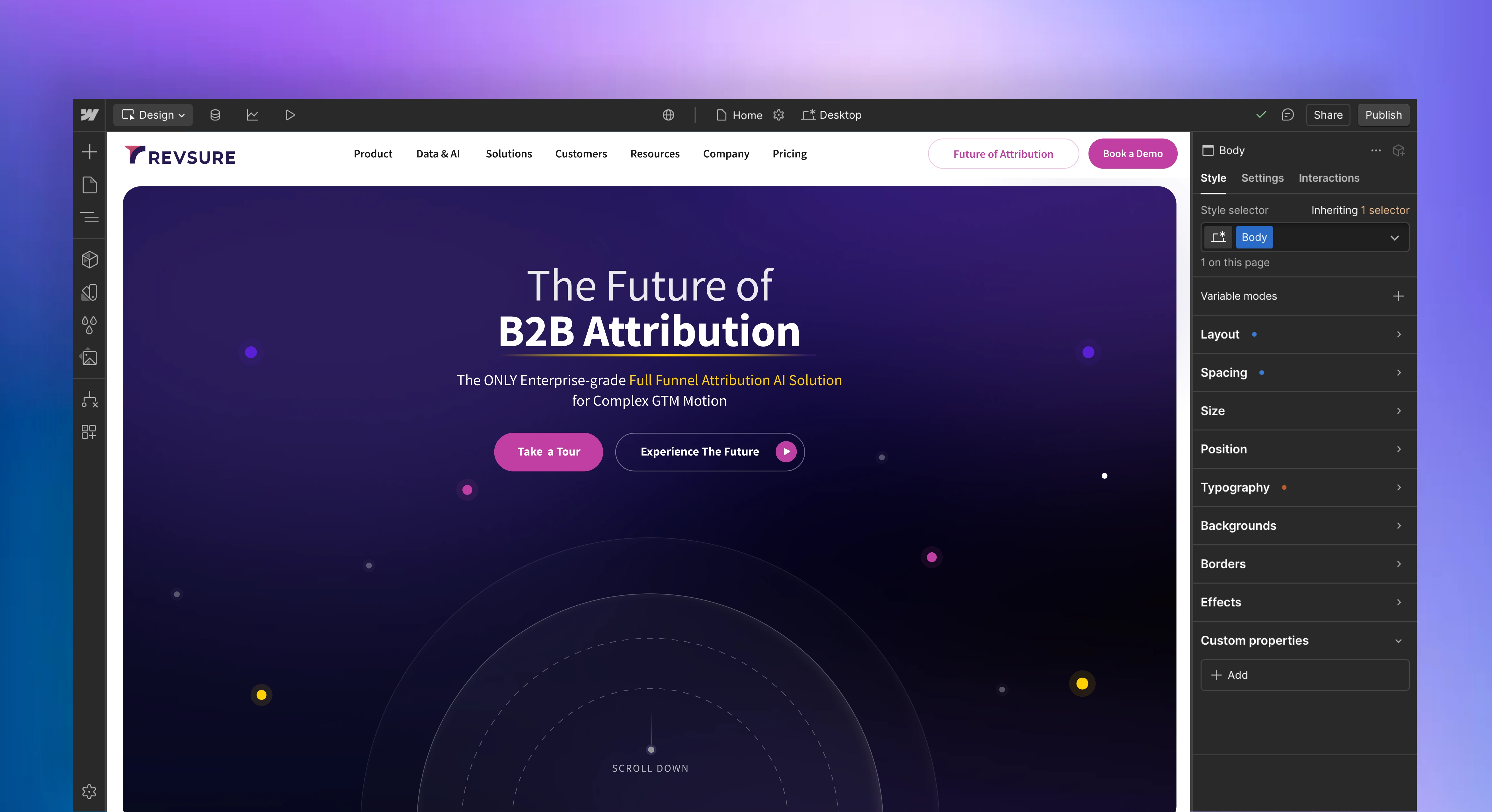
This is where Webflow gives marketing teams an advantage. Its visual development platform allows marketers to launch landing pages, publish content, improve SEO and optimize user experiences without relying on developers for every update. The result is a website that evolves with customer needs and supports the entire buying journey.
Most B2B websites are built to look polished. The ones that generate pipeline are built to answer questions, reduce uncertainty and make the next step obvious.
B2B purchases are rarely made by a single decision-maker. They involve multiple stakeholders, larger budgets and longer evaluation periods, making trust and education essential throughout the buying process.
Before contacting sales, buyers often discover businesses through search engines, blogs, webinars, comparison pages, customer stories and industry recommendations. Every interaction shapes their perception of your brand.
Instead of treating the website as a final conversion point, businesses should design it to support every stage of the journey. Educational resources build awareness, product pages answer questions, and case studies provide the confidence buyers need to move forward.
By the time prospects contact sales, they're usually validating a decision rather than starting their research.
Many visitors never see your homepage. They arrive through search results, paid campaigns or email links, making landing pages one of the most important assets for lead generation.
An effective landing page focuses on a single objective. It combines a compelling headline, benefit-driven messaging, clear visual hierarchy and one strong call-to-action while eliminating unnecessary distractions.
Webflow makes it easy for marketing teams to create, duplicate and optimize landing pages for different campaigns, industries or buyer personas without waiting for development resources.
High-converting landing pages typically include:
Every landing page should have one objective and one clear next step.
Content marketing generates qualified leads by helping buyers solve problems before they're ready to make a purchase. Instead of promoting products at every opportunity, successful B2B brands educate their audience.
Blog articles introduce new ideas, while comparison pages, FAQs, implementation guides and customer success stories help buyers evaluate solutions with greater confidence.
Webflow CMS enables marketing teams to publish and manage content efficiently while maintaining design consistency and SEO best practices. Organizing content into topic clusters, strengthening internal links and regularly updating existing articles improves both search visibility and user engagement.
Helpful content reduces uncertainty at every stage of the buying process, making sales conversations shorter and more productive.
Even the best-designed website cannot generate leads if potential customers never find it. Organic search remains one of the highest-intent acquisition channels because users are actively looking for solutions.
Webflow supports technical SEO with clean code, customizable metadata, responsive layouts and fast-loading pages. Combined with intuitive navigation and logical information architecture, these improvements make it easier for both search engines and visitors to understand your website.
Ranking gets someone to the page. Fast loading, clear navigation and useful content determine whether they stay.
Capturing a lead is only the beginning of the relationship. Because B2B buying cycles are often lengthy, consistent and relevant follow-up is essential.
Integrating Webflow with CRM and marketing automation platforms allows businesses to trigger personalized workflows after a visitor submits a form or downloads a resource. Depending on their interests, prospects can receive educational emails, relevant case studies, webinar invitations or product updates that guide them toward a purchase decision.
Lead scoring and behavioral tracking also help sales teams prioritize prospects showing stronger buying intent while continuing to nurture those who need more time.
One well-timed email based on a prospect's interests usually performs better than a sequence of generic follow-ups.
Lead generation isn't something you perfect once. Customer behavior, search trends and business priorities change continuously, making ongoing optimization essential.
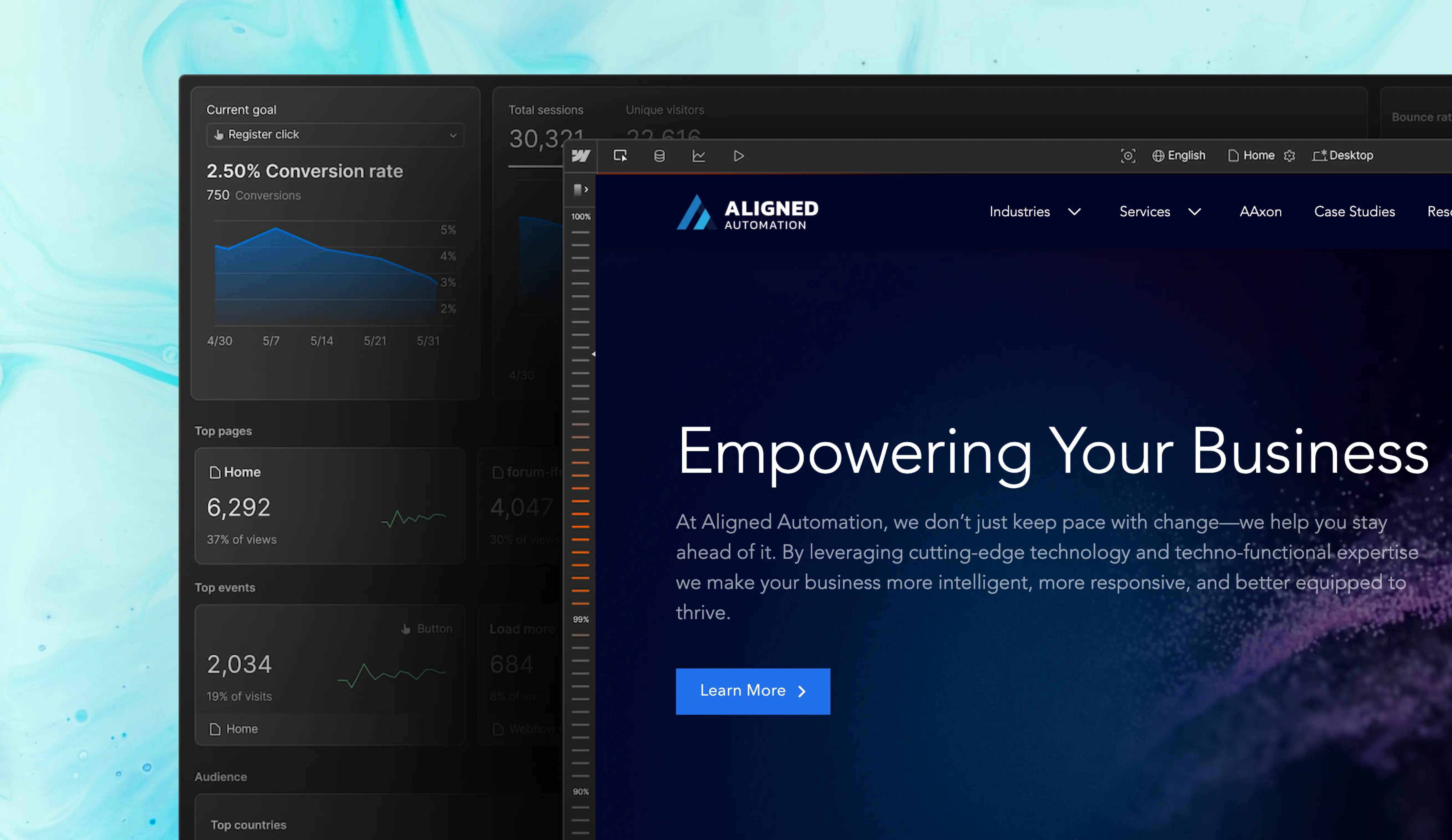
Track metrics such as conversion rates, bounce rates, form submissions and user journeys to understand where visitors drop off. Use A/B testing to experiment with headlines, layouts, CTAs and forms, while heatmaps and session recordings reveal friction that analytics alone cannot explain.
Treat the website as a product with a monthly roadmap, not a project with a launch date.
Many businesses invest heavily in website redesigns but overlook the fundamentals that influence conversions.
Common mistakes include prioritizing aesthetics over usability, using generic messaging, offering multiple competing calls-to-action, neglecting SEO, creating lengthy forms, publishing outdated content and failing to follow up after a lead is captured.
Improving lead generation often comes down to simplifying the experience. Cut the unnecessary form field before adding another feature to the page.
A high-performing B2B website does more than attract visitors—it helps buyers make informed decisions at every stage of their journey. From targeted landing pages and valuable content to strong SEO, personalized nurturing and continuous optimization, every element should reduce friction and build confidence.
Webflow gives marketing teams the flexibility to improve these experiences quickly without sacrificing performance or design quality. As customer expectations evolve, businesses that continuously refine their websites will be better positioned to generate qualified leads and build stronger customer relationships.
The best B2B websites keep earning trust long after the form gets submitted.

The journey’s just as exciting as the destination. So, what are you waiting for? Let’s hit the gas.